
Understanding Your Core | Guest Post
09 September 2024 — david-allen
As a qualified physiotherapist with over 24 years of experience, Becca has been helping clients improve their quality of life through a comprehensive approach of treatment, education, and goal-focused exercises. Here she tells us more about some techniques to help you understand your body for rehabilitation.
Understanding Your Core
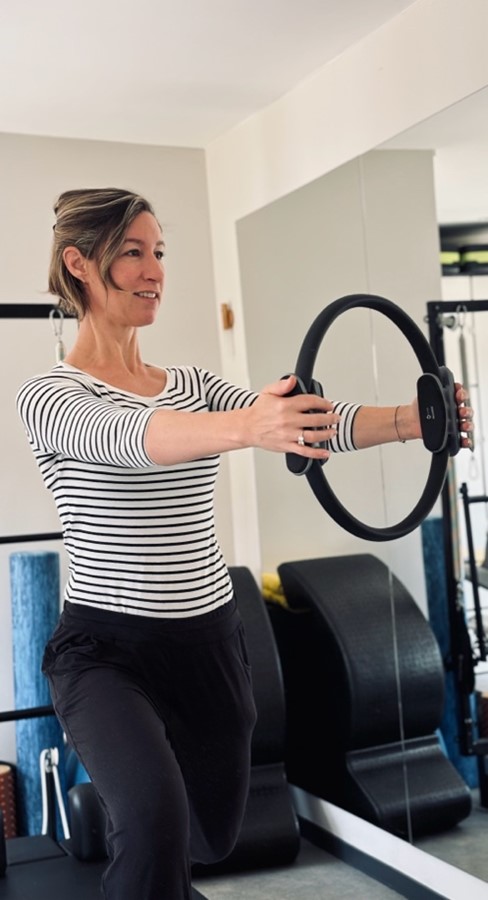
Every client I see is treated as an individual case, and my treatment method is specific to their needs and personal goals. I use a wide range of evidence-based manual techniques combined with exercise rehabilitation. Rehabilitation is a specialised component of physio, which helps clients regain better/normal function after an injury, illness, or operation with the goal of enabling them to return to their daily duties, activities, or sport. Rehabilitation can include a personal exercise program and clinical Pilates. Clinical Pilates is a form of exercise that combines traditional Pilates exercises with Physiotherapy assessment and clinical expertise to deliver a personalised program plan for the client’s specific needs. It promotes body stability, strength, flexibility, and improves the client’s body control and awareness. Clinical Pilates starts with the core.
What is the Core?
The “core” is often talked about in fitness and health. In a physiotherapy setting, the core refers to a group of muscles located in the centre of your body. The main ones of interest for clinical Pilates are:
- Diaphragm
- Pelvic floor
- Transversus abdominis (and Multifidus)
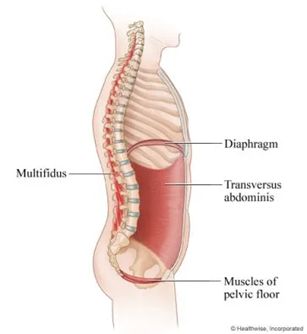 These muscles work together to stabilize your spine and pelvis, provide support for your movements, and protect your internal organs.
The Diaphragm: Breathing and Stabilization
- Breathing: The diaphragm is a dome-shaped muscle located under your lungs. It’s your main breathing muscle, but it also plays a key role in stabilizing your core. When you inhale, the diaphragm contracts and moves downward, allowing your lungs to expand. When you exhale, it relaxes and moves upward, helping to push air out.
- Core Stability: In clinical Pilates, we teach people how to breathe correctly in order to encourage the activation of the core efficiently. Correct breathing and use of the diaphragm help reduce blood pressure, promote calming hormones (reducing stress), and can improve spine mobility.
Pelvic Floor Muscles: Support from Below
The pelvic floor muscles form a sling at the bottom of your pelvis, supporting the bladder, intestines, and in women, the uterus. These muscles are crucial for:
- Support: They help keep your pelvic organs in place.
- Core Stability: They work with other core muscles to create a stable base for movement, especially important during exercises and heavy lifting.
- Continence: They control the release of urine and feces.
Transversus Abdominis: The Body’s Natural Corset
The transversus abdominis (TVA) is the deepest layer of abdominal muscles, wrapping around your torso like a corset. Its roles include:
- Stabilization: It acts as a natural corset for your spine, containing the abdominal contents and aiding stability.
- Movement Support: When functioning correctly, it activates during all movements of our body.
Working Together for Stability
We often describe the core muscles as being like a tin can, as it can help visualize them all working together. 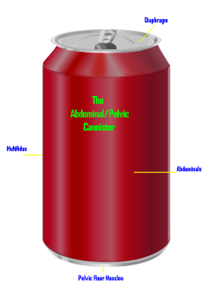
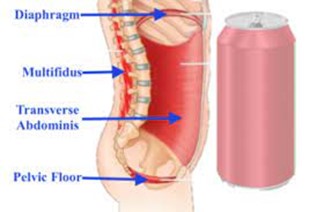
The individual parts of the core are designed to work together to generate and maintain stability and to support your body during any movement. As a physiotherapist working with clients who have undergone various treatments in their medical journey, I help them improve their stability. We often go back to basics, focusing on correct breathing, good postural alignment in the pelvis, rib cage, shoulders, and neck, before progressing to build up strength and endurance. Retraining muscles to work together to better stabilize the body leads to incredible changes—from pain management to reduced anxiety to improved flexibility—all of which make everyday life more comfortable.
My advice to anyone reading this who is keen to explore things further, find a qualified clinical Pilates instructor near you, start slow, and listen to your body.
Rebecca works privately in West London, W3.
www.beccavk.com
Latest Articles
See all Articles
16 September 2026 — Lia Rogers
Cancer Support Services in Harrogate | SpotlightThere are over 6,000 local and national support services listed across the UK on Cancer Care Map. Today we’re spotlighting some of the cancer support services available in and around Harrogate. The Dodgy Walnut – Support group for younger men and their partners who are living with, or affected by, prostate cancer. Although […]
27 August 2026 — Lia Rogers
Guest Blog | The Pixel Nurse – Restoring Confidence After Cancer Through Specialist TattooingIn today’s blog, we hear from Laura Jane Powell about her journey through nursing and oncology plastics, to medical tattooing. The Pixel Nurse began in a small, uninspiring hospital room at The Royal Marsden. After completing a foundation year in art, I decided that a traditional career in art wasn’t for me and chose […]