Guest Blog | Mark Rayment | Barbers Against Prostate Cancer
10 March 2026 — jessica-bailey
As part of Prostate Cancer Awareness Month, we spoke with Mark Rayment about his national pop-up barbershop initiative, using non-clinical settings to raise awareness of prostate cancer and spark conversations with men across the UK.
From the Barbershop Chair to Parliament: Why Barbers Against Prostate Cancer Exists
A lot of my working life has been spent working behind a barber’s chair and educating the next generation of hairdressers and barbers.
Like many barbers, I’ve listened to thousands of conversations — about football, work, family, relationships, and life in general. The barber’s chair is a place of trust. People open up. What I rarely heard, though, were conversations about health. Especially men’s health. And almost never prostate cancer.
That lack of conversation took on a completely different meaning when I was diagnosed with prostate cancer myself.
I was diagnosed despite having no symptoms at all. I felt well, stayed active, and had no obvious reason to think anything was wrong. Like so many others, my diagnosis came as a shock — and it made me realise how easily prostate cancer can go undetected until for some men the diagnoses comes too late.
Using my experience as both a barber and someone living with prostate cancer, I knew we had an opportunity to make a real difference.
That’s why I founded Barbers Against Prostate Cancer.
Turning Conversations into Action.
Barbers Against Prostate Cancer (BAPC) was created with a clear and specific aim: to raise awareness of prostate cancer, its risk groups, the symptoms and the importance of early detection.
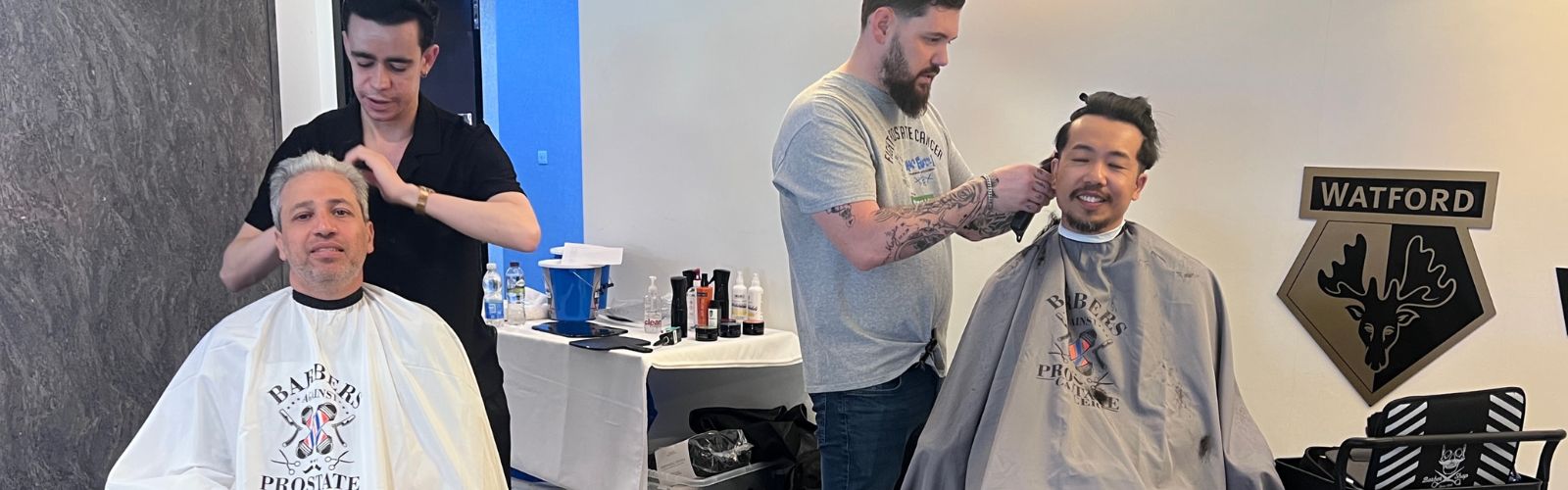
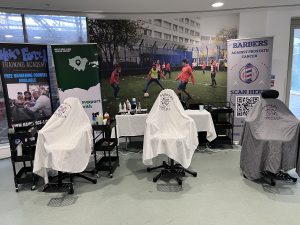
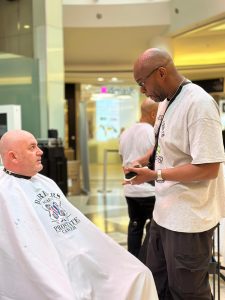
We deliver pop-up barbershops in high footfall locations, offering free haircuts to people aged 40+ with a prostate, alongside informal but meaningful conversations about prostate health directing them to leaflets and recommending they speak to a medical professional if they have concerns.
There are no clinical settings, no lectures, and no pressure — just honest discussion in places people already feel comfortable.
Since launching, we’ve taken BAPC into high-footfall areas, including Lakeside Shopping Centre, football grounds such as Queens Park Rangers, Watford FC, and most recently the Premier League football club Arsenal.
These environments allow us to reach men who may never attend a health event, respond to a leaflet, or proactively engage with cancer services.
Who We Support
Our work is primarily aimed at:
- Men and people with a prostate, aged 40 and over
- Those at higher risk, including Black men and people with a family history of prostate cancer
- Families, partners, and communities affected by prostate cancer
By operating outside traditional healthcare environments, we reduce anxiety and create space for open, honest questions that people may have been holding onto for years.
Why This Work Matters
Some of the most powerful moments come from simple conversations — someone realising they’re at higher risk than they thought, someone deciding to book a GP appointment, or someone saying they finally understand prostate cancer in a way they never did before.
For me, this work is deeply personal. Turning my diagnosis into something that helps others gives purpose to an experience I wouldn’t wish on anyone.
Why We’ve Launched a Government Petition
While awareness is vital, it’s not enough on its own. Systemic change is needed. That’s why BAPC has launched a Government petition calling for the NHS to issue a Prostate Cancer Risk Questionnaire at age 45.
This simple step would help people:
- Understand their personal risk earlier
- Know when to monitor symptoms or seek medical advice
- Reduce late-stage diagnoses
- Save lives
👉 Sign the petition here: https://petition.parliament.uk/petitions/752846
How You Can Support Barbers Against Prostate Cancer
- Sign and share the petition
- Follow and amplify our work on social media
- Invite BAPC into your workplace, venue, or community space
- Support us through partnerships or donations
📍 Instagram:https://www.instagram.com/barbersagainstprostatecancer
📍 Facebook: https://www.facebook.com/profile.php?id=61551955209657
To find prostate cancer support or other cancer services near you, search Cancer Care Map’s homepage using your postcode.
Latest Articles
See all Articles
16 September 2026 — Lia Rogers
Cancer Support Services in Harrogate | SpotlightThere are over 6,000 local and national support services listed across the UK on Cancer Care Map. Today we’re spotlighting some of the cancer support services available in and around Harrogate. The Dodgy Walnut – Support group for younger men and their partners who are living with, or affected by, prostate cancer. Although […]

27 August 2026 — Lia Rogers
Guest Blog | The Pixel Nurse – Restoring Confidence After Cancer Through Specialist TattooingIn today’s blog, we hear from Laura Jane Powell about her journey through nursing and oncology plastics, to medical tattooing. The Pixel Nurse began in a small, uninspiring hospital room at The Royal Marsden. After completing a foundation year in art, I decided that a traditional career in art wasn’t for me and chose […]