5 Minutes With… Hastings Voluntary Action/Macmillan Cancer Champions Project
19 January 2026 — jessica-bailey
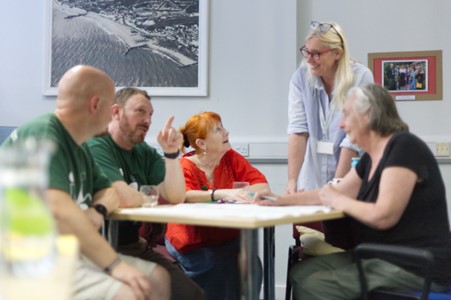
We spoke with Jane Dodson, Macmillan Project Manager at Hastings Voluntary Action, to learn more about the Cancer Champions Project – a community initiative offering peer support, drop-ins, and workshops for people living with and affected by cancer, aimed at raising awareness and increasing uptake of cancer screening and support services in the local area.

Tell us about your organisation?
Back in 2023, Macmillan approached Hastings Voluntary Action (HVA) to consider hosting a Cancer Champions project. They recognised that there are underserved communities in the town, where people face a range of structural barriers to healthcare.
Research consistently shows that people in these areas experience worse cancer outcomes, including higher mortality rates and lower survival rates, compared to those in more affluent areas. A complex mix of risk factors and variations in healthcare access can mean that people are less likely to be diagnosed early or take up screening and other support services.
The champions model uses a strengths-based approach, which builds upon individual and community strengths. HVA were already running successful health and wellbeing projects, being a trusted voice in the community and supporting over 200 members. The strategic fit between Macmillan’s focus on addressing health inequity, and HVA’s commitment to community resilience, health and wellbeing was a perfect match.
So, in late summer 2024 the Hastings Cancer Champions project was born.
What services do you offer people living with or affected by cancer?
A Hastings Cancer Champion is a volunteer, often with lived experience, who is willing and able to have conversations about cancer in their communities. This can be anywhere they are, at church, at the bus stop, at the football club, or at work. In this way, we start where people are and use social networks to reach deeply into areas to myth bust, and signpost to services. They also provide emotional support, and someone to talk to who understands what people affected by cancer are going through.
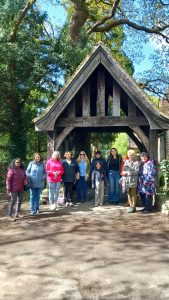
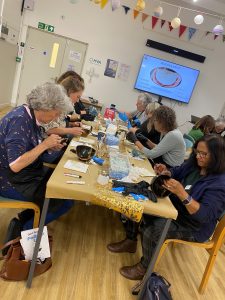
We offer a range of free workshops – in cancer awareness, conversational skills, mental health first aid, loneliness and social isolation, and other topics that Champions identify might be useful. These are complemented by drop-in peer support sessions, which often involve a shoulder-to-shoulder, creative activity. These are co-designed by the Champions themselves, who are at the heart of all that we do. Recent examples have included a bluebell walk and meditation in local woodland led by one of our Champions, and a kintsugi workshop which involved visibly mending and rebuilding broken ceramic bowls, to make them whole again, demonstrating beauty in imperfection.
During these drop-ins, we use tools such as our bingo card, to spark chats about the impact of the conversations that our Champions are having, identifying any key themes or barriers that may be arising, whether it be in a supermarket chat or sewing group. The bingo card simply breaks down elements of the role, be that sharing something on social media, telling their story at an event, or following up with someone regarding an appointment. We also have things like, being kind to yourself, attending a training workshop or coming along to a drop-in. We offer refreshments, and there is often a lively atmosphere, sometimes a few tears, and more often lots of laughter!
Who are your services aimed at supporting?
We are particularly keen to reach people in the low income communities in North East Hastings and Hollington, but we also focus on people with learning disabilities, and other communities of interest that our Champions highlight or are working with.
We have an accessible, town centre venue with modern screens, facilities for wheelchair users, those with impaired hearing, and a full kitchen area. Macmillan provide information in sixteen different languages, including BSL. We liaise with the local Information and Support hub and Macmillan central to provide materials for events and work with another of HVA’s project, Links, which supports refugees and asylum seekers.
What’s the most rewarding thing about the work you do?
We hold celebration events, where we aim to bring music, storytelling, and joy to a safe space with our Champions. I also enjoy meeting with the wider Hastings and Rother Cancer Support Network, quarterly, and working with them to develop a strategy going forward. Finally, bringing the voices of people with lived experience into policy consultations, and helping to inform wider systems change, motivates me.
What would you say to those who are considering getting in touch but are nervous or apprehensive?
We are a very friendly and chatty group, with lots of diverse interests. From cycle rides to woodland walks, we have something for everyone, and there is no one size fits all. It all starts with a conversation with Yasmine, myself, or one of our Champions. We can take it from there if it feels like a good fit. We often find that people who come into the programme are already having conversations, so the workshops and drop-ins simply support them in what they are already doing. Many report that being in a space where they can discuss their experiences with others who understand how they feel, is therapeutic and useful.
Do you have testimonials from people that have used your services?
“When I was first diagnosed with cancer, I didn’t know how much was out there for us. I’m learning so much right now, and I want to share that with everyone.”
“I feel that all of our Champions can give hope that there definitely is life after cancer.”
“Hopefully by sharing my story with others, they will have the courage to get diagnosed earlier.”
Can you tell us about your team?
My background is in community development, some of it overseas, and a strong interest in social policy. I’ve lived in Hastings for the past 20 years and love my adopted home.
Yasmine is currently studying for her Masters in Health Promotion at the University of Brighton alongside working on the programme, and has formerly held a role at East Sussex Community Voice, which delivers Healthwatch in East Sussex.
We both work Monday – Thursday on the project and our contact details are here.
Our values are to ensure that our Champions are at the heart of designing all that we do. We are also evidence-based and monitor our impact. In three words, I’d describe our project as ‘supportive, kind and honest’
We are core funded for three years by Macmillan. Hastings Voluntary Action is a registered charity and we are very open to new partnerships, donations and support. More information on this can be found here.
We have a local musician hosting a benefit gig and the local Football Club is dedicating a match to us in their fixture list.
You can read more about Hastings Voluntary Action by going to their website here. If you’d like to discover similar support services in your area, please search on Cancer Care Map’s homepage using your postcode.
Latest Articles
See all Articles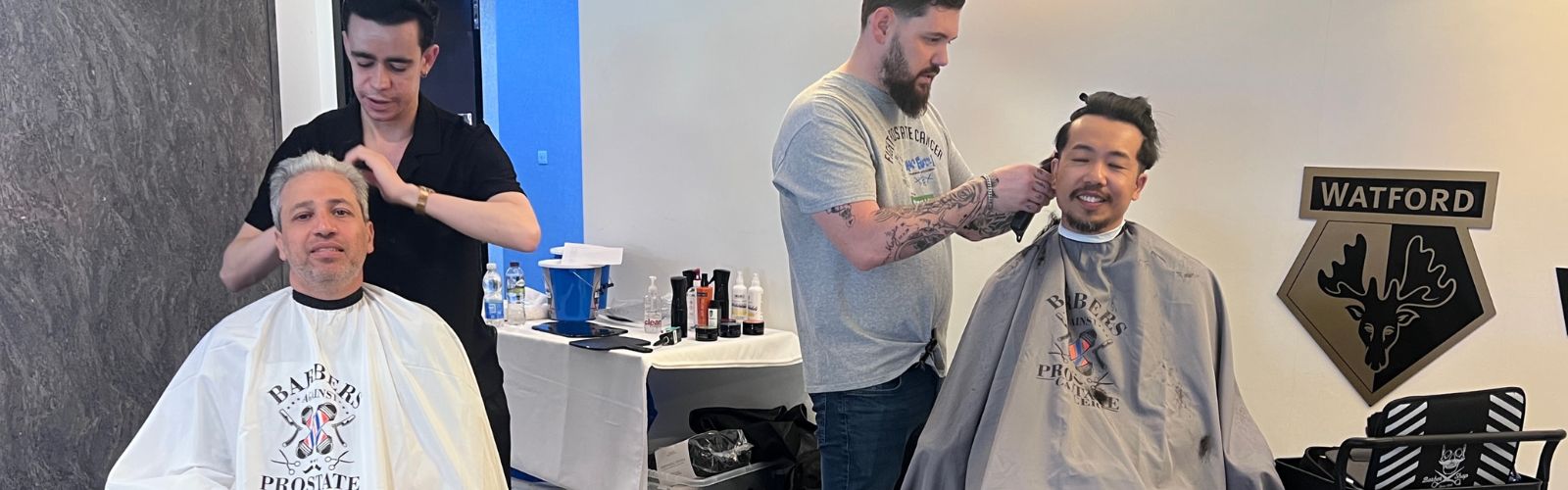
10 March 2026 — Jessica Bailey
Guest Blog | Mark Rayment | Barbers Against Prostate CancerAs part of Prostate Cancer Awareness Month, we spoke with Mark Rayment about his national pop-up barbershop initiative, using non-clinical settings to raise awareness of prostate cancer and spark conversations with men across the UK. From the Barbershop Chair to Parliament: Why Barbers Against Prostate Cancer Exists A lot of my working life […]
03 March 2026 — Lia Rogers
5 Minutes with The Cancer Mum CheerleaderWe spoke to Sharon Goodway about her work as The Cancer Mum Cheerleader, her own cancer journey, and how she supports women through diagnosis, treatment and beyond. Tell us about your organisation? I was diagnosed with Non Hodgkins Lymphoma (which is a blood cancer) in March 2021, this was found in my eye […]